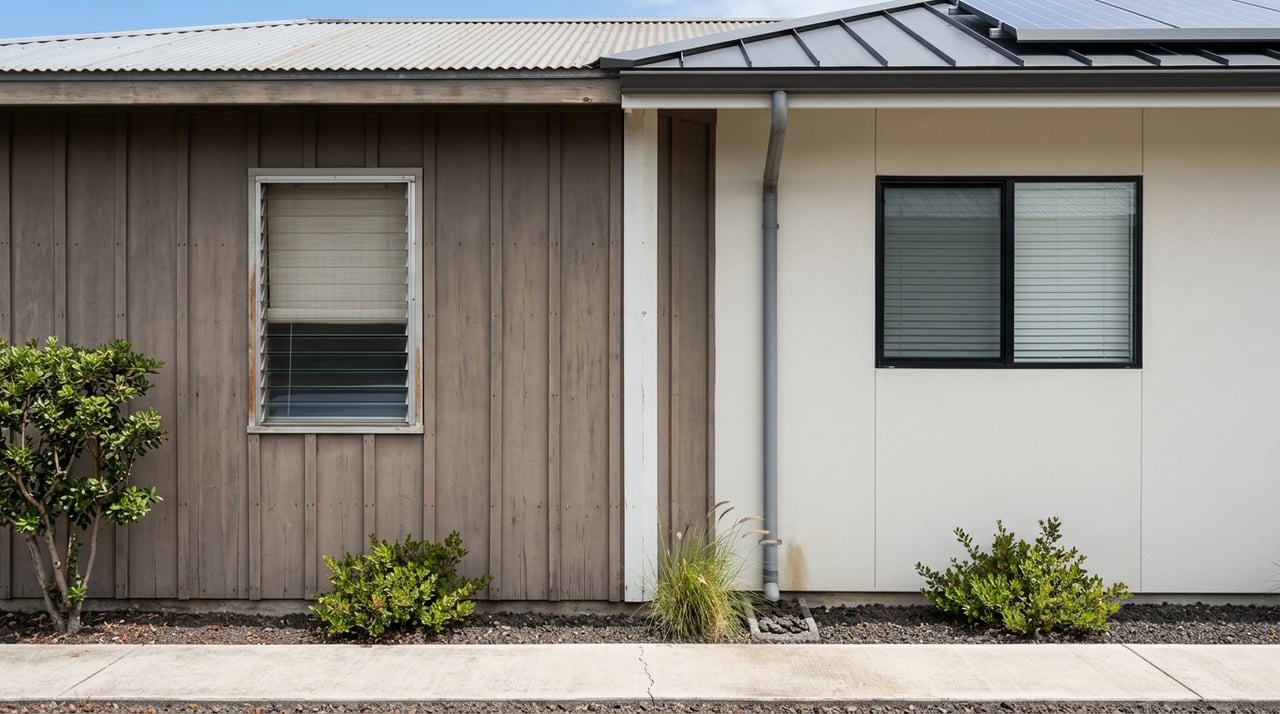
Buying in Kailua-Kona often comes down to one big question: do you want the efficiency and predictability of a newer home, or the character and renovation potential of a vintage one? In a warm coastal market where sun, airflow, and upkeep can shape your day-to-day experience, that choice matters more than it might in other places. If you are weighing both options, it helps to look past style alone and focus on how each type of home performs in West Hawaiʻi conditions. Let’s dive in.
Kailua-Kona Climate Shapes the Decision
Kailua-Kona’s climate plays a major role in how a home feels and functions. NOAA normals for the area show an annual mean temperature of 78.2°F, just 7.1 inches of annual rainfall, 0 heating degree days, and 8,488 cooling degree days.
That means your priorities are usually not about heating systems or winter weather. Instead, cooling, shade, airflow, humidity control, and solar heat gain tend to matter much more when you compare newer builds with older homes.
Why Newer Builds Appeal
Newer homes in Kailua-Kona are typically built under more current code standards. Hawaiʻi County permit reviews use the 2018 IBC and 2018 IECC as amended, effective September 1, 2021, and the Hawaiʻi State Energy Office notes that the currently enforced county energy code is the 2018 IECC with amendments.
For you as a buyer, that often translates into a home designed with energy performance in mind from the start. In a climate like Kona’s, that can be a practical advantage rather than just a nice extra.
Energy Features You May See
Hawaiʻi’s residential energy checklist for tropical-zone homes pushes new single-family construction toward several features that fit local conditions well. These include solar water heating, low solar heat gain coefficient windows that commonly use dual-pane low-emissivity glazing, ceiling fans or rough-ins in bedrooms and the largest non-bedroom space, and air-leakage control.
These features can support comfort in a hot, sunny environment. Better window performance and fan planning, in particular, may help a home handle heat and airflow more effectively.
Structural Advantages of Modern Construction
Newer homes are also often easier to strengthen using modern construction methods. A Hawaiʻi historic-homes storm-preparedness guide notes that modern residential construction more often uses double-wall framing with exterior sheathing and drywall, along with slab-on-grade foundations that can accept anchor bolts, metal straps, and holdowns.
That does not mean every new home is identical, but it does mean newer construction may line up more closely with current expectations for structural connections. If you want fewer unknowns around framing and anchoring, this can be a meaningful point in favor of a newer build.
One Tradeoff to Watch
Newer is not automatically better in every way. The University of Hawaiʻi CTAHR notes that tighter houses can reduce uncontrolled air leakage, but they may also be more susceptible to humidity problems if ventilation is not handled well.
In other words, efficiency and comfort go together best when ventilation is planned properly. When you tour a newer home, it is worth paying attention to how the home manages airflow, not just how new the finishes look.
Why Vintage Homes Stand Out
Vintage homes in Hawaiʻi often attract buyers for reasons that have little to do with checklists and everything to do with feel. Older homes may reflect plantation-vernacular or related regional styles, with features such as single-wall or plank-frame construction, vertical tongue-and-groove or board-and-batten walls, corrugated metal roofs, double-hung windows, and layouts that emphasize lanais and indoor-outdoor living.
For many buyers, that architectural character is the draw. A vintage home can offer a sense of place and design personality that is hard to replicate in newer construction.
Character Often Comes With More Unknowns
That same Hawaiʻi historic-homes guide also explains why older properties deserve careful review. Single-wall residences typically have light non-engineered framing, lower uplift capacity, and foundations that may not be properly anchored.
So while a vintage home may be beautiful and functional, it can also require more targeted upgrades. If you love the style of an older home, it helps to go in expecting a closer look at structure, roof connections, and long-term maintenance needs.
Renovation Potential Can Be a Plus
For some buyers, the appeal of a vintage home is the ability to improve it over time. You may be able to preserve architectural charm while updating systems, improving comfort, or adding value through thoughtful renovation.
That said, Hawaiʻi County requires permits for most building, electrical, and plumbing work involving a structure, including additions, alterations, repairs, renovations, and demolitions. Permitted work also goes through inspections at stages such as foundation, framing, and final inspection, so planning ahead matters.
Key Risks to Compare in Kailua-Kona
When you compare newer builds and vintage homes, the real question is often about risk profile. One option may offer greater efficiency and fewer immediate surprises, while the other may offer more character but require a deeper inspection plan.
Here are some of the biggest issues to keep in mind in Kailua-Kona.
Termite Exposure
Termites are a serious issue in Hawaiʻi, and Kona is no exception. The University of Hawaiʻi CTAHR says the Formosan subterranean termite is the single most damaging insect pest to homes in Hawaiʻi, that it is found in Kona, and that unprotected homes can be severely damaged in as little as two years.
That makes termite history especially important when you evaluate an older property, though no home should skip this review. Evidence of past treatment, current protection, or prior damage deserves close attention.
Roof and Connection Details
Older homes often need closer review at the roof and structural connection points. The historic-homes storm-preparedness guide highlights roof-to-wall connections and foundation anchoring as common areas where older single-wall homes may need retrofit attention.
If you are looking at a vintage home, roof age and fastening details should be high on your checklist. These details may affect both near-term maintenance and your long-term upgrade plans.
Lead Paint and Older Materials
If a home was built before 1978, material safety becomes another due-diligence item. CTAHR notes that many Hawaiʻi homes built before 1978 may contain lead-based paint, and remodeling can create lead dust.
CTAHR also notes that lead can enter a home through older plumbing components. For buyers considering renovation, these are practical issues to evaluate early.
How Permits Affect Your Choice
Permits are a big part of the newer-versus-vintage decision, especially if you want to improve a property after closing. Hawaiʻi County’s rules apply to most construction, electrical, and plumbing work, so renovation scope can affect both cost and timeline.
There is also an important code angle. Hawaiʻi’s residential energy checklist says additions must meet current new-construction requirements for the added portions, even though unaltered parts of an existing home do not need to be brought fully up to the same standard.
That means a vintage home can absolutely be updated thoughtfully, but additions and major upgrades still move through today’s code framework. If you are buying with renovation in mind, permit history and project feasibility should be part of your decision from the beginning.
Inspection Priorities for Buyers
Whether you lean newer or older, a focused inspection strategy can help you make a better decision. In Kailua-Kona, these topics are often especially useful to review:
- Roof age and fastening details, especially on older wood-framed homes
- Termite history and evidence of treatment or damage
- Window type, ventilation strategy, and sun control
- Anchor, connector, and corrosion conditions in older framing
- Lead-paint and plumbing concerns in pre-1978 homes
- Permit history for additions, remodels, and electrical or plumbing work
A newer home may check more of these boxes more easily, but it is still smart to verify. A vintage home may need a more careful review, but that does not make it the wrong choice if the condition, price, and upgrade path make sense for your goals.
Which Type of Home Fits You Best?
If you want a home that aligns more closely with current energy and structural standards, a newer build may feel like the more straightforward path. You may get features that support cooling and efficiency, along with construction methods that are generally easier to evaluate in today’s context.
If you are drawn to architectural character, indoor-outdoor design, and the idea of improving a property over time, a vintage home may be the better fit. You just want to approach it with clear eyes, solid inspections, and a realistic plan for maintenance or upgrades.
In Kailua-Kona, neither option is automatically better for everyone. The best choice is the one that matches how you want to live, how much uncertainty you are comfortable with, and whether you prefer move-in simplicity or character with project potential.
If you want help comparing specific properties in Kailua-Kona, Hawai'i Estates can help you weigh condition, permitting considerations, and renovation potential with practical local insight.
FAQs
What makes newer homes in Kailua-Kona different from older homes?
- Newer homes are generally built under more current energy and building code standards, while older homes may offer more architectural character but can come with more maintenance and retrofit considerations.
Why does climate matter when comparing homes in Kailua-Kona?
- Kailua-Kona’s warm climate means cooling, shading, airflow, humidity control, and solar heat gain usually matter more than heating features.
What should you inspect in a vintage Kailua-Kona home?
- Key areas include roof age and fastening, termite history, structural connectors and anchoring, ventilation and window performance, lead-paint concerns in pre-1978 homes, and permit history for past work.
Are newer homes in Kailua-Kona usually more energy efficient?
- They often align more closely with current energy requirements, including features such as solar water heating, low-SHGC windows, ceiling fans or fan rough-ins, and air-leakage control.
Can you renovate an older home in Kailua-Kona?
- Yes, but Hawaiʻi County requires permits for most building, electrical, and plumbing work, and additions generally must meet current code requirements for the new work.
Are termites a real concern for Kailua-Kona homes?
- Yes. The University of Hawaiʻi CTAHR says the Formosan subterranean termite is found in Kona and can severely damage unprotected homes in as little as two years.