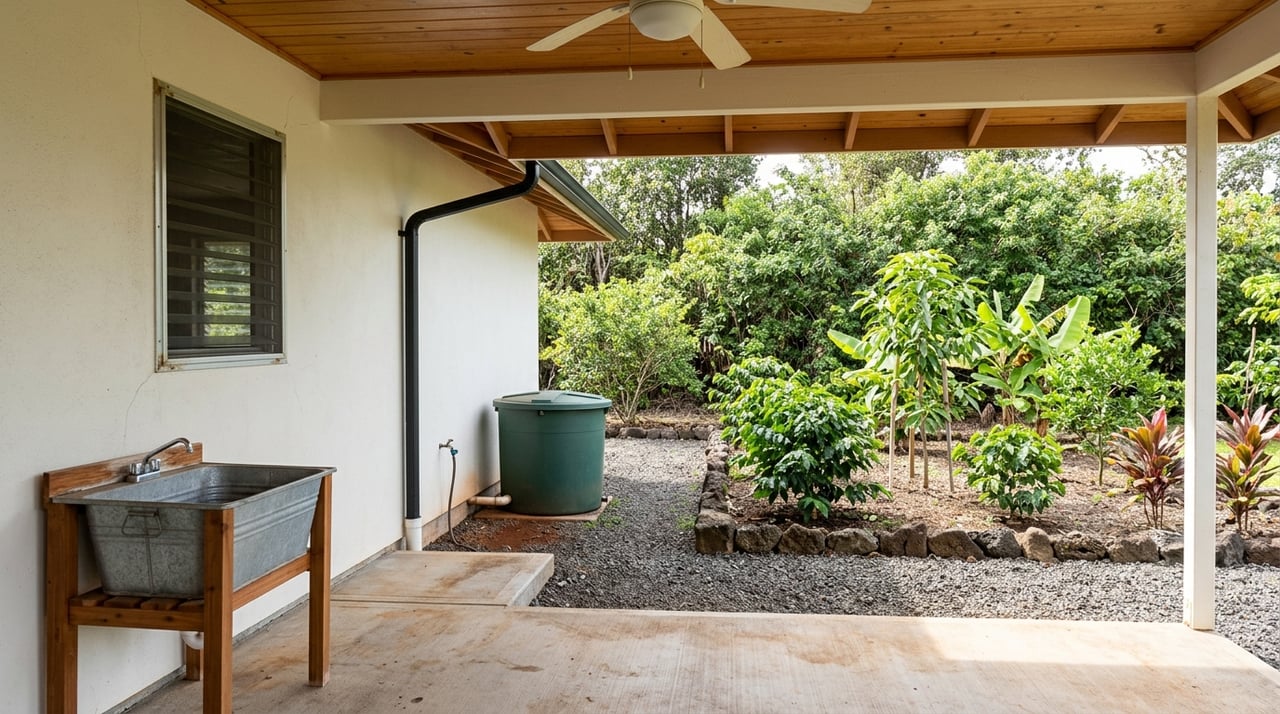
If you picture South Kona as a place where a home and the land work together, you are on the right track. Buying a homestead or small acreage property here is often less about square footage and more about how the site functions day to day. From elevation and rainfall to water systems and access, there are a few practical details that can make all the difference. Let’s dive in.
What Small Acreage Means in South Kona
South Kona is a rural, low-density district with homes, farms, and scattered communities spread across places like Kealakekua, Captain Cook, Honaunau, Napo'op'o, Ke'ei, Milolii, Ho'okena, Papa Bay, and Kona Paradise. The area includes steep coastal and upland terrain, so properties can feel very different from one road to the next.
That rural character shows up clearly in land use. County figures cited in the South Kona Community Wildfire Protection Plan show the district is about 76% agricultural land, 8.3% open land, and just 0.25% single-family residential. In other words, when you shop here, you are usually evaluating land, systems, and usability just as much as the home itself.
South Kona Microclimates Matter
One of the first things to understand is that South Kona does not have one single climate. Conditions shift quickly with elevation, especially between the coast and the agricultural belt.
The agricultural belt sits roughly between 700 and 2,000 feet elevation, and the Kona coffee belt forms a narrow strip about two miles wide above Kealakekua. The district is also sheltered from the northeast trade winds by the leeward slopes of Hualalai and Mauna Loa, which helps create distinct coast-to-upcountry microclimates.
That matters because rain and temperature can change a lot over a short distance. While nearby Kailua-Kona Airport is known for warm, dry conditions, the Kona Research Station in Kealakekua records about 60 inches of annual rainfall and average temperatures around 60°F to 78°F. The Rainfall Atlas also describes South Kona as having a distinct rain belt with an afternoon rainfall peak.
Why climate affects daily living
If you are considering a homestead property, climate shapes more than your comfort. It affects what you can grow, how often you mow or trim, how quickly driveways weather, and how much attention your drainage needs.
A parcel at one elevation may feel lush and productive, while another nearby may feel drier or more exposed. That is why local context matters so much when you compare one South Kona property to another.
Zoning and Parcel Size Shape Your Options
South Kona is overwhelmingly agricultural, so zoning and minimum lot size are key parts of the buying process. Hawaiʻi County zoning includes agricultural districts with minimum building sites from 1 to 5 acres and residential-agricultural districts from 0.5 to 2 acres.
The county planning department notes that zoning controls permitted uses, setbacks, height limits, and other restrictions. For buyers, that means you should not assume that every acre can be used the same way or improved the same way.
What buyers often evaluate
On small acreage in South Kona, the questions often go beyond the home itself. You may need to assess:
- Usable versus steep land
- Driveway layout and vehicle access
- Parking and turning areas
- Space for water storage or catchment tanks
- Wastewater field location
- Areas for gardens, orchards, or small-scale farming
Flat buildable land can be limited in upland areas. That is why a parcel’s layout can have a big effect on how easy it is to live there.
What the Land Can Support
South Kona’s agricultural identity is part of what draws many buyers to the area. Common land uses in the district include coffee, macadamia, avocado, fruits and vegetables, cattle ranching, and related support activities.
The Kona Research Station also points to figs, lychee, taro, and other specialty crops as part of the region’s growing picture. If your goal is a small working landscape, South Kona may offer room to create that, but success depends on matching your plans to the parcel’s elevation, rainfall, and layout.
A homestead is often a working landscape
This is one of the biggest mindset shifts for buyers coming from more suburban properties. In South Kona, small acreage living is often not about having a large decorative yard.
Instead, it is about managing land that may include orchard space, garden areas, slopes, access roads, drainage paths, tanks, and service zones. A property can be beautiful and productive, but it usually asks more of you in return.
Water Is a Major Part of the Decision
In South Kona, water is one of the most important practical questions you can ask. The South Kona Water System is supplied by groundwater sources including Ke'ei Wells A, B, C, and D, along with Haleki'i Well, and the source may change with supply and demand.
At the same time, municipal water does not reach every area. The South Kona Community Wildfire Protection Plan notes that Ho'okena is the southernmost area served by municipal water, while residents south of Ho'okena depend on rain catchment and hauled water for potable supply.
There are also no perennial streams in the Kona area, which reinforces how important on-site water planning can be. For many small acreage properties, the water setup is not a side issue. It is central to daily life.
Rain catchment is common, but it needs care
Rainwater catchment is a normal part of life in Hawaiʻi for domestic supply and agriculture. The University of Hawaiʻi CTAHR describes it as an age-old method, and the Hawaiʻi Department of Health says individual-home catchment is not regulated but should be well designed, regularly maintained, and periodically tested.
The Department of Health specifically recommends cleaning roofs, tanks, gutters, and filters and following CTAHR guidance. If a property relies on catchment, you will want a clear picture of tank condition, filtration, maintenance habits, and overall system setup before you close.
Wastewater Needs Careful Verification
Wastewater is another make-or-break issue on South Kona acreage. The Hawaiʻi Department of Health says a typical individual wastewater system is a septic tank plus an absorption field, and that field can be damaged by heavy objects or tree roots.
The same guidance notes that the field may be placed under driveways or parking areas if properly designed. This is one reason site layout matters so much. What looks like open usable space may also be serving an important system function.
Why cesspools deserve special attention
The Department of Health says cesspools discharge untreated wastewater to groundwater. It also states that every cesspool must be upgraded or connected by January 1, 2050, with earlier triggers possible after certain building modifications or repeated pumping and spills.
For buyers, that means it is worth confirming the wastewater type early in the process. If the system is unclear, the Department of Health advises hiring a licensed wastewater engineer. New owners can be responsible for bringing a noncompliant system into compliance, so this is not a detail to leave for later.
Upkeep Is Part of the Lifestyle
South Kona ownership has a rhythm that feels different from a home on a compact subdivision lot. The 2024 South Kona Community Wildfire Protection Plan identifies steep slopes, rough terrain, recurring drought, fire-promoting fuels, and homes spread out along roads as part of the district’s conditions.
In day-to-day terms, that often means routine vegetation control, drainage and erosion management, and keeping access clear for vehicles and service visits. Because homes and services are spread out, errands and supply runs can also become part of your normal weekly routine.
Fire readiness and property management
The wildfire plan notes that unmanaged vegetation can contribute to fire spread. It also reports that structural fires often occur in old coffee plantation homes.
That does not mean every property is high risk in the same way, but it does mean buyers should look closely at vegetation, defensible space, access, and the condition of older improvements. A well-maintained property often feels easier to own because the systems and landscape are already being actively managed.
Who South Kona Homestead Living Fits Best
South Kona small acreage tends to work best for buyers who want room to garden, farm, or live with a little more space and independence. It can be a strong fit if you are comfortable with hands-on upkeep and willing to verify the property’s systems before making a final decision.
The practical checklist is straightforward. Before making an offer, confirm zoning, water source, wastewater type, and access. Those four items often tell you a great deal about whether a property will feel simple, demanding, or somewhere in between.
How to Shop Smart in South Kona
If you are comparing homestead properties, it helps to look at each one as a complete system instead of just a house on land. A beautiful view or attractive home may still come with important questions about access, grading, catchment, or wastewater.
A smart review usually includes:
- Zoning and permitted use
- Elevation and microclimate
- Water source and storage
- Wastewater type and condition
- Driveway access and parking
- Vegetation management needs
- Buildable or usable areas of the lot
This is where local knowledge can save you time and help reduce surprises. In a market like South Kona, practical details are often what separate a good fit from a frustrating one.
South Kona offers a kind of living that feels grounded, productive, and closely tied to the land. If you are drawn to coffee country, small farms, or a home that functions like a small working landscape, taking the time to understand the property’s systems is one of the best moves you can make. If you want guidance from a locally rooted team that understands South Kona’s land, homes, and day-to-day realities, connect with Hawai'i Estates.
FAQs
What is South Kona homestead living like for buyers?
- South Kona homestead living is typically rural and low-density, with buyers evaluating land use, access, water, wastewater, and upkeep along with the home itself.
What crops or agricultural uses are common in South Kona?
- Common land uses in South Kona include coffee, macadamia, avocado, fruits and vegetables, cattle ranching, and some specialty crops such as figs, lychee, and taro.
What should buyers know about water on South Kona acreage?
- Some areas have municipal water, but the South Kona Community Wildfire Protection Plan notes that areas south of Ho'okena often rely on rain catchment and hauled water, so buyers should verify the actual water source for each property.
What wastewater systems are common on South Kona properties?
- Individual wastewater systems commonly include a septic tank and absorption field, and some properties may have cesspools, which the Hawaiʻi Department of Health says must be upgraded or connected by January 1, 2050.
What zoning issues matter for South Kona small acreage?
- Hawaiʻi County zoning affects permitted uses, setbacks, height limits, and other restrictions, so buyers should confirm the zoning district and how it applies to the parcel they are considering.
What upkeep comes with small acreage living in South Kona?
- Owners often need to manage vegetation, drainage, erosion, and access, and the rural layout of the district can make service coordination and supply runs part of normal property ownership.