Most South Kona sellers hear "2050" and file the cesspool conversation under future problems. That is the wrong file. The deadline is a distraction. The real friction shows up the week you list, when a buyer's lender asks about the wastewater system, when the seller disclosure form forces a written answer, and when a buyer's inspector starts asking whether the leach field can even fit on a lot of pāhoehoe. If you own a home from Kealakekua down through Hōnaunau to Miloliʻi, the cesspool question is a closing-table question, not a mid-century one.
This post is for owners preparing to list and for buyers writing offers on rural South Kona properties. The goal is to show where the money and the risk actually sit, using what the Hawaiʻi Department of Health, the county, and the current 2026 legislature have on the record.
The Deadline Isn't the Point. The Disclosure Is.
Hawaiʻi's cesspool rules trace to a 2017 statute requiring every cesspool in the state to be upgraded, converted, or connected to a sewer by January 1, 2050, a rule the EPA repeats on its own Hawaiʻi cesspools page. That framing lets sellers assume they have twenty-four years to think about it. They don't, because Chapter 508D of the Hawaiʻi Revised Statutes already requires sellers to disclose material facts that would measurably affect value, and the state legislature has explicitly found that a cesspool subject to a conversion deadline is such a fact. The Sellers Real Property Disclosure Statement asks directly about the wastewater system serving the property and about any abandoned cesspool or septic on the parcel.
A buyer reading that disclosure in 2026 is not thinking about 2050. They are thinking about the estimate they will get from a licensed engineer next week and whether they should ask for a credit at closing.
The Priority tier assigned to your parcel by the University of Hawaiʻi Cesspool Hazard Assessment and Prioritization Tool shapes how aggressively that buyer negotiates. Roughly 13,800 cesspools statewide sit at Priority 1, the "greatest contamination hazard" designation, and more than 12,300 sit at Priority 2. South Kona has both, because so much of the district is close to the coast, close to drinking water sources, or both.
| Priority tier | What it signals to a buyer | Practical closing impact |
|---|---|---|
| Priority 1 | Nearest drinking water or coastal waters, greatest hazard | Buyer will often price the full conversion into the offer |
| Priority 2 | Significant contamination hazard | Buyer typically asks for credit or engineered estimate |
| Priority 3 | Lower-risk locations further from sensitive resources | Usually a disclosure item, not a price driver |
Mayor Kimo Alameda has asked state lawmakers to extend the Priority 2 deadline to 2060 and Priority 3 to 2070, arguing on the math that eight conversions a day for twenty-four years is not achievable on Hawaiʻi Island, which alone holds roughly 50,000 of the state's cesspools. Any relief he wins helps homeowners plan. It does not change the disclosure form a South Kona seller signs this year.
The Precedent That Should Make Every Seller Cautious
Kona already lived through a compressed version of this story. In 2005, the EPA's federal ban on large-capacity cesspools, systems serving multiple homes or generating more than a certain daily flow, took effect with no waiver available. Several Kona neighborhoods relied on shared "gang cesspools" that fell under the federal rule. Once lenders realized the systems were noncompliant, financing on those homes stopped. Local agents at the time began calling the situation a deal killer, and sellers could not close until costly upgrades were completed.
That is the mechanism worth studying. Regulatory noncompliance did not wait for a distant deadline. It surfaced the moment a buyer's lender read the file. The single-family cesspools that dominate South Kona are not federally regulated in the same way, but the pattern generalizes: when a wastewater system is a known liability, underwriters get conservative, appraisers get careful, and buyers get leverage.
What Conversion Actually Costs on Lava
The numbers matter because a seller who prices for a conversion is competing with a seller who is pretending the issue isn't there. Buyers can tell the difference.
- Basic engineered septic on cooperative soil: around $20,000 in total costs including engineering, tank, drain field, and cesspool decommissioning, per a first-hand Hawaiʻi Island conversion documented by Hawaiʻi Life broker Beth Thoma Robinson in North Kohala.
- Standard install on the Big Island generally: the $30,000 to $50,000 range is more realistic once engineering, permitting, excavation, and installation are all counted, per practitioner estimates published during the 2026 legislative debate.
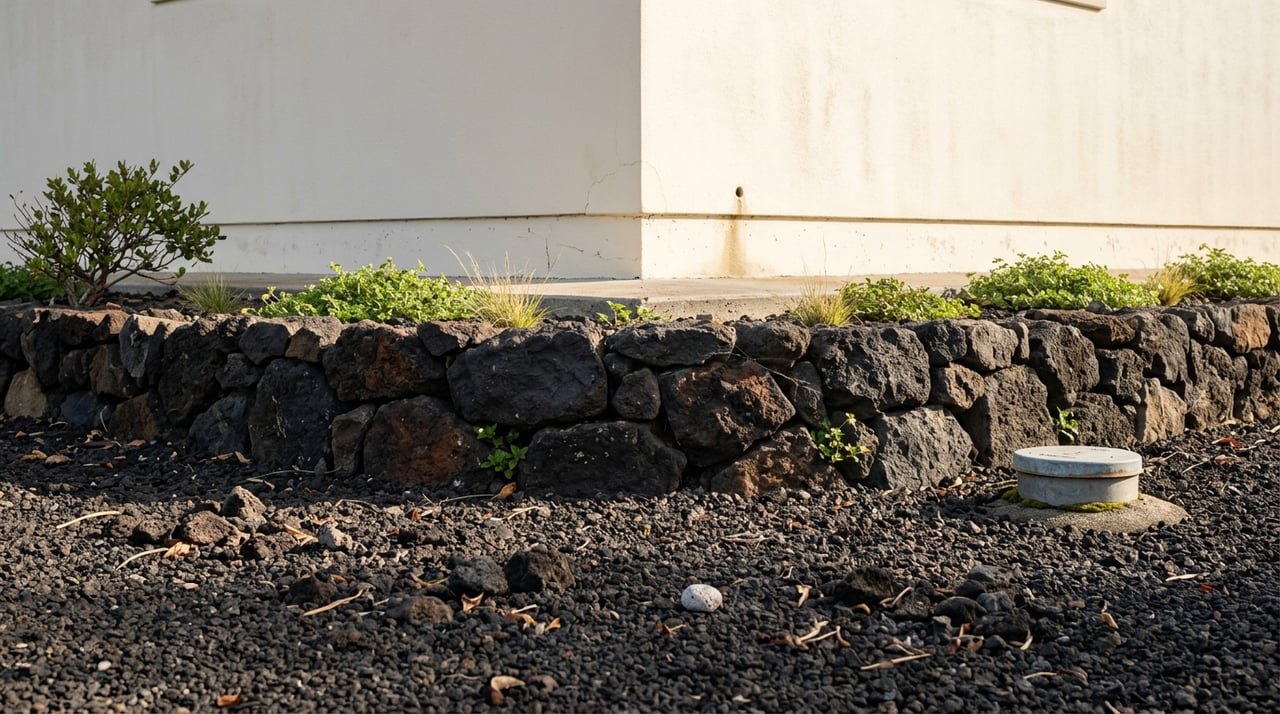
- Pāhoehoe or ʻaʻā substrate: conventional trench systems often will not perform, and the Hawaiʻi DOH regime pushes those parcels toward engineered mounds or aerobic treatment units, which sit at the higher end of that range.
- State income tax credit: up to $10,000 per qualified conversion, capped and subject to certification by the Department of Health.
- Grant availability: the 2022 Cesspool Conversion Grant Program funded through Act 153 offered up to $20,000 per property to lower- and moderate-income owners, but the entire $5 million pool was exhausted within a week of launch, according to reporting by Honolulu Civil Beat.
The gap between what the state helps with and what the work actually costs is the number a South Kona seller needs to know before pricing a listing. On a Hōnaunau property with tight setbacks, coastal proximity, and lava rock underfoot, that gap can be $20,000 or more out of pocket even after the credit.
What's Changing in 2026 That Affects Your File This Year
Four bills moved through the 2026 legislative session that touch this issue directly. HB1749 would create a standardized cesspool disclosure form, tightening what sellers must document. HB376 would accelerate conversion timelines for high-priority cesspools flagged by the UH tool. HB2079 would expand the existing tax credit. HB1730 sets up a framework for improved statewide coordination. Passage through committee is not the same as becoming law, and any seller relying on a specific bill should verify status through the Hawaiʻi State Legislature site rather than a summary.
South Kona has a more concrete piece of 2026 news. Governor Green's green fee advisory council recommended $1 million toward a cesspool conversion project at Hōnaunau, roughly twenty miles up the coast from Miloliʻi, according to Honolulu Civil Beat's February 2026 reporting. That single sentence tells you two things worth pricing into a listing: the state considers Hōnaunau a priority contamination area, and public money may eventually offset a portion of neighborhood conversion costs, though the timing is uncertain.
The nearby Kealakehe Wastewater Treatment Plant story is a useful sanity check on that timing. A federal Clean Water Act settlement between Hawaiʻi County and Hui Mālama Honokōhau required construction to begin on plant upgrades by March 1, 2026. A bid protest by Hensel Phelps delayed the notice to proceed, and the Hawaii Tribune-Herald reported in late June 2026 that construction still had not started. Stipulated penalties accrue at roughly $1,000 a day. If the county cannot start a single court-ordered upgrade on time, no South Kona seller should list a home assuming the state's grant and infrastructure programs will materialize before their transaction closes.
What to Do Before You Put a South Kona Home on the Market
- Confirm what you actually have. Pull county records and compare against the wastewater section of your current disclosure statement. If a prior owner converted to septic, you want the paperwork before a buyer asks.
- Look up your Priority tier using the Hawaiʻi DOH Cesspool Prioritization Tool. A Priority 1 designation changes your listing strategy.
- Get an engineer's estimate now, not during escrow. An IWS application requires a Hawaiʻi-licensed engineer. Having a real bid in hand lets you either price the conversion into the listing or offer a specific closing credit rather than negotiate blind.
- Ask the escrow officer to flag wastewater early. This one comes straight from the practitioners who deal with these files. Lender questions surface late in the timeline, and late surprises kill deals.
- Know the honest cost of decommissioning. A cesspool that is no longer in use still has to be properly abandoned. That work is part of a compliant conversion and part of the real cost.
FAQ
Does a cesspool automatically hurt my sale price in South Kona? Not automatically. Priority 3 parcels far from the coast often trade with the cesspool intact and a matter-of-fact disclosure. Priority 1 parcels near Hōnaunau or the shoreline are a different conversation, and buyers there increasingly price the conversion into their offers.
Can a buyer get a mortgage on a home with a cesspool? Most conventional loans on single-family homes will fund with a compliant, disclosed cesspool, but individual lenders have their own overlays, and rural properties with unusual systems draw more scrutiny. The 2005 large-capacity cesspool episode in Kona is the cautionary tale: when a system falls out of compliance, financing can disappear quickly.
Is it smarter to convert before listing or offer a credit? It depends on the property and the buyer pool. Converting before listing removes the friction and lets the home appraise cleanly. Offering a credit preserves the seller's cash but invites negotiation. On lava-heavy parcels where the engineered system is expensive and slow to permit, converting early usually wins.
Where does the 2050 deadline actually bite? On refinances, on estate transfers, and on any future buyer's willingness to close. The deadline is a slow-motion event, but every year that passes tightens the market for noncompliant properties.
If you own or are considering a home in South Kona and want a candid read on how the wastewater picture affects your price, timeline, or negotiation strategy, reach out to Hawaiʻi Estates. Get your Instant Home Valuation to start the conversation with real numbers rather than assumptions.