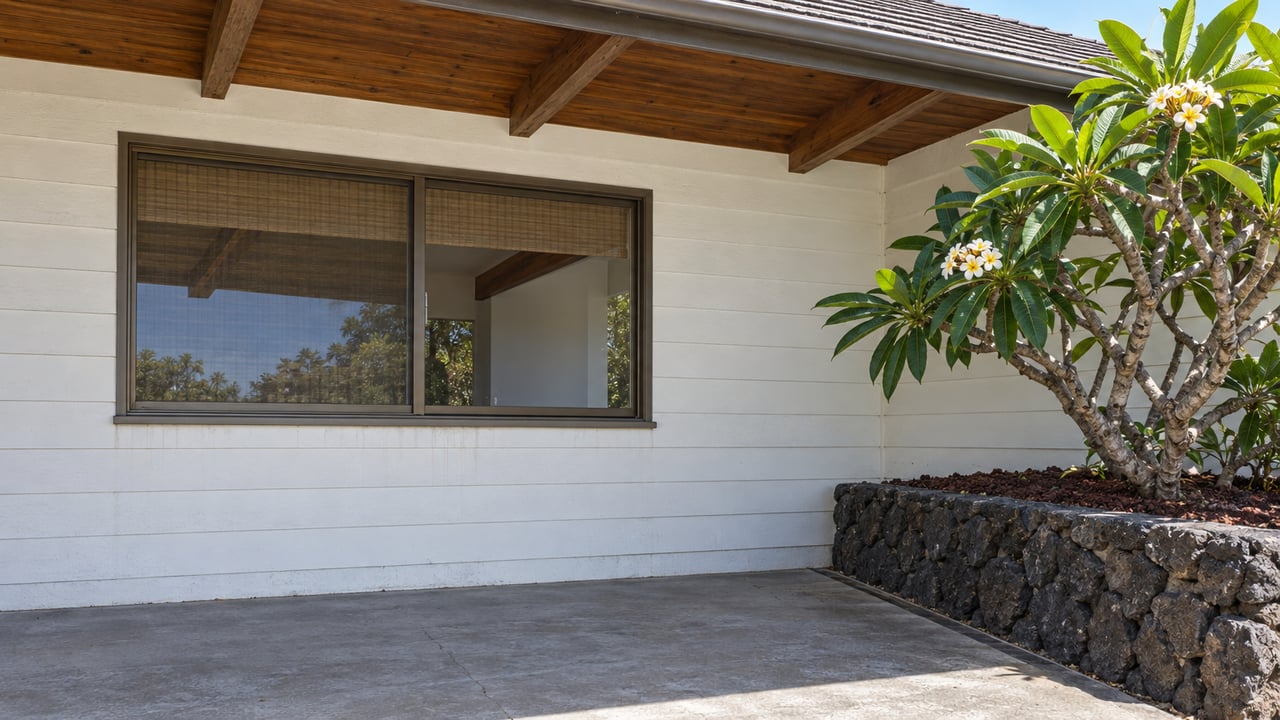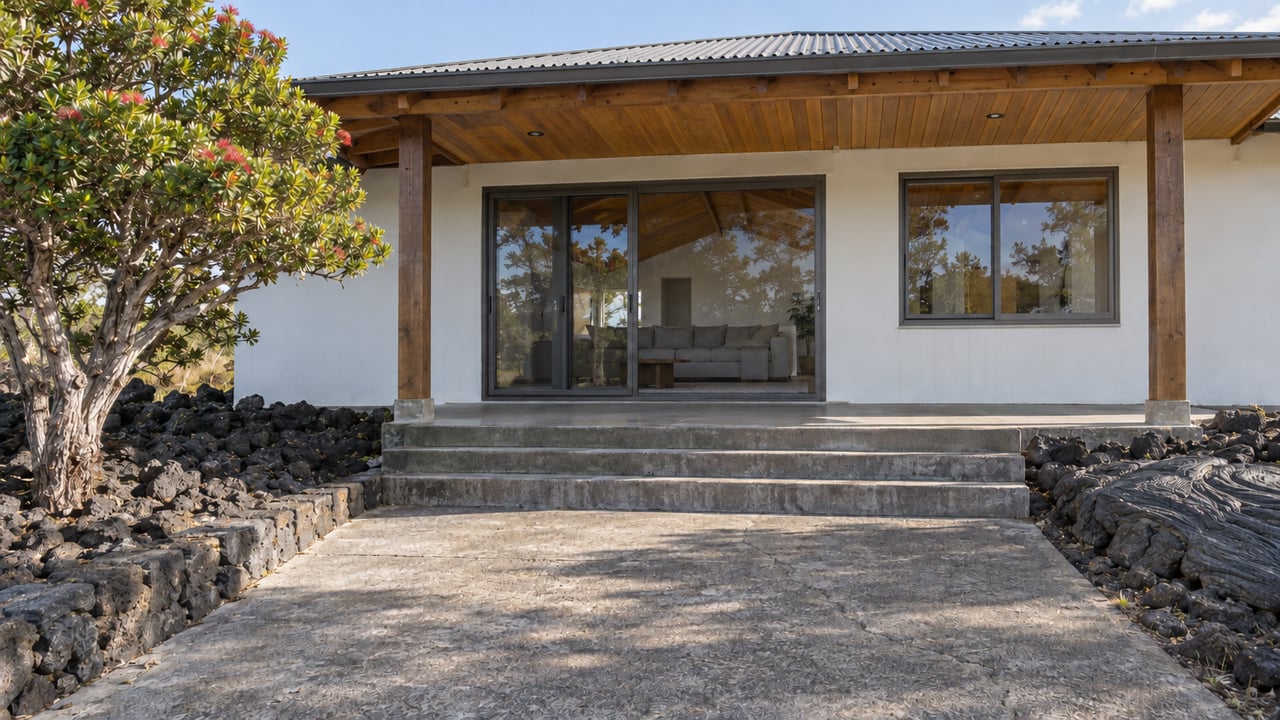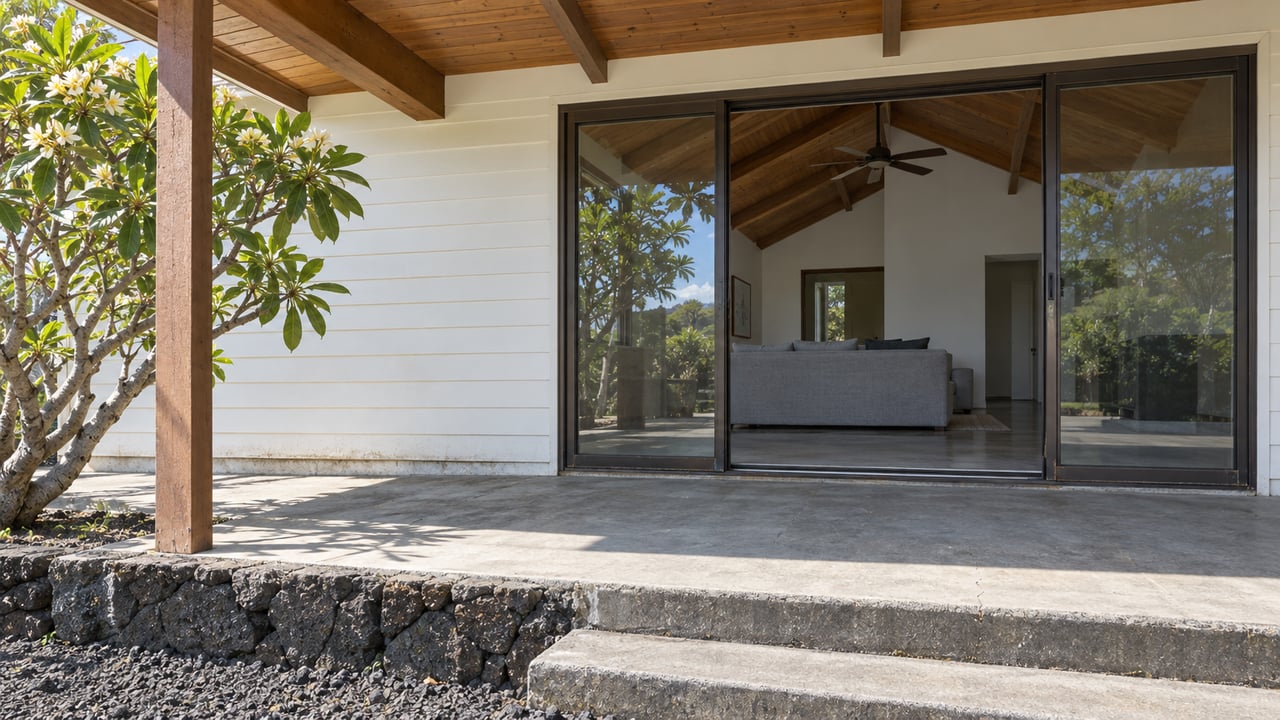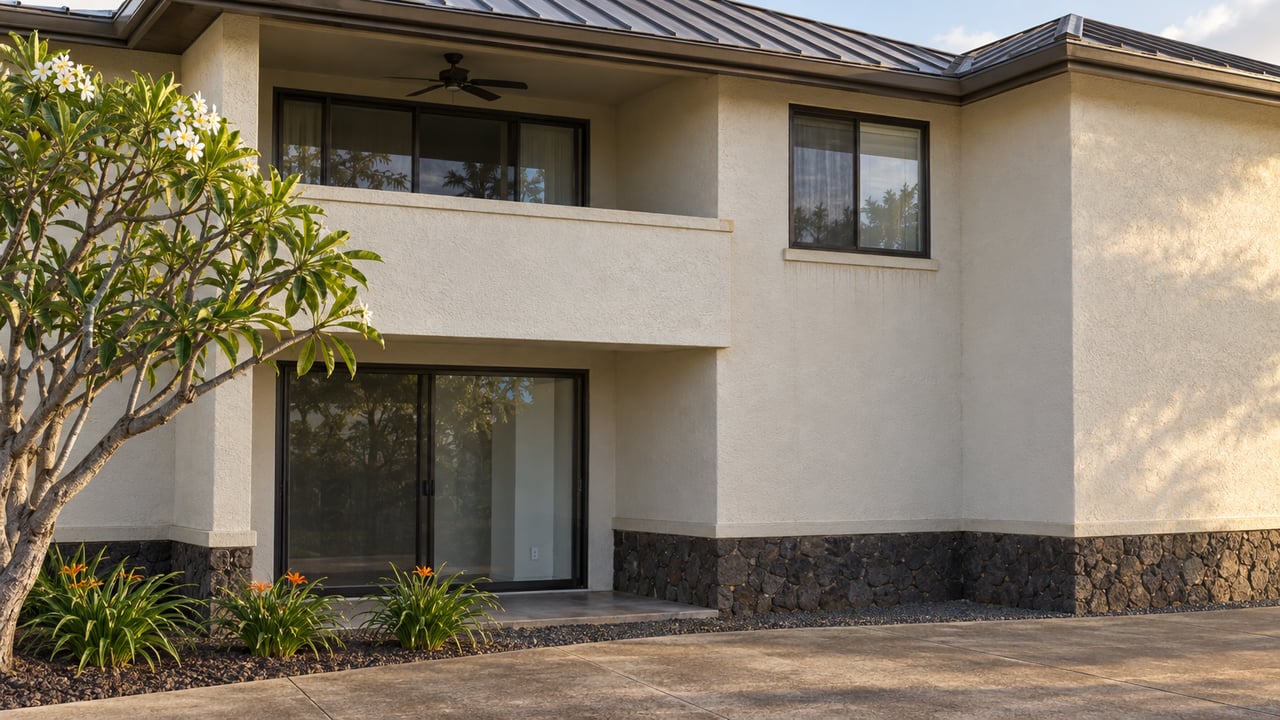
Two showings, same week, both in Kailua-Kona. The first is a one-bedroom at Kona Reef, oceanfront, built in the early 1980s, listed comfortably under half a million dollars. The second is a three-bedroom in Kaloko Mauka, upcountry, newer construction, listed north of $700,000. On paper these look like two ends of the same market, moving together, softening or firming as one. They are not. Through the first seven months of 2026, Kailua-Kona's single-family homes have held remarkably steady while its condos have fallen hard enough to erase three years of appreciation. Anyone reading a single median for "Kailua-Kona" is reading a number that blends two markets behaving nothing alike, and the reason for the gap has almost nothing to do with buyer demand.
Two Medians, One Zip Code
Year-to-date through mid-2026, Kailua-Kona single-family homes carry a median sale price near $1.225 million, down 6.1 percent from a year earlier. That decline sounds significant until you look at price per square foot, which is down only about 1 percent. Homes are taking a little longer to sell and inventory has grown, but the underlying value of the dirt and the structure on it has barely moved. Months of supply sits at 5.4, the textbook definition of a balanced market.
Condos tell a different story. The year-to-date median has fallen to $570,000, down somewhere between 12 and 14 percent depending on which month you compare, and that number has round-tripped all the way back to where it sat in 2023 after peaking near $694,000 in April 2025. Months of supply has climbed to roughly 7.7, comfortably inside buyer's market territory, with far more active listings than pending sales to absorb them.
| Single-family (YTD 2026) | Condos (YTD 2026) | |
|---|---|---|
| Median price | ~$1.225M | $570,000 |
| Year-over-year change | -6.1% | -12% to -14% |
| Price per square foot | Down ~1% | Softening further |
| Months of supply | 5.4 (balanced) | 7.7 (buyer's market) |
A market report covering this same mid-year window attributed the condo softening directly to insurance issues and tightening rental zoning regulations, not to weaker interest in owning a piece of Kailua-Kona. That is the thread worth pulling.
The Building Stock Doing the Heavy Lifting
Kailua-Kona's condo inventory is dominated by oceanfront and ocean-view complexes of roughly 40 to 200 units, most built between 1970 and 1995. Names buyers will recognize touring the coast include Casa De Emdeko, Kona Reef, Sea Village, Kona Bali Kai, Kanaloa at Kona, and the Keauhou Kona Surf & Racquet Club further south. These buildings are exactly the profile insurers have grown wary of statewide: concrete construction now more than three decades old, aging plumbing risers, and roofs and systems approaching or past their designed service life.
The state's Department of Commerce and Consumer Affairs has tracked what that wariness costs. Its condominium bulletin reports that most Hawaii condos are seeing master policy renewal premiums increase 150 to 800 percent compared to their expiring rates, with most landing somewhere between 400 and 500 percent. A handful of insurers cover the majority of the state's wood-frame and concrete associations, and several stopped writing new business altogether as claims mounted. When a board can't renew coverage through the standard market, it turns to excess or surplus lines carriers.
Governor Green signed Act 296 in July 2025 to try to slow the bleeding, reviving the Hawaii Hurricane Relief Fund so associations locked out of private hurricane coverage would have somewhere to turn. The relief comes with conditions worth knowing if you are evaluating a specific building: an association must have already been denied hurricane coverage by at least two state-licensed insurers, and the building's total insured value must exceed $10 million before HHRF coverage even applies, and even then it only covers losses above that $10 million threshold. A mid-sized Kailua-Kona complex with a $12 million insured value and a lapsed hurricane policy is exactly the kind of building this law was written for, and exactly the kind of building where a buyer should expect to see a special assessment notice somewhere in the resale packet.
Single-family owners are not entirely spared. Insurers have started asking harder questions about older roofs and outdated electrical and plumbing systems, and some homeowners have seen individual policies non-renewed for those reasons alone. But that risk sits with one owner and one house. In a condo, the same underwriting pressure gets spread across a shared master policy, and when premiums move, every owner in the building feels it on the same statement, at the same time, regardless of whether their individual unit has been renovated.
The Other Number Nobody Puts in the Median
Insurance explains part of the condo softening. Regulation explains the rest, and it traces back to how thoroughly Kailua-Kona's vacation rental economy lives inside condo walls rather than single-family neighborhoods.
Hawaii County's 2018 ordinance, known locally as Bill 108, already confines new unhosted short-term vacation rentals almost entirely to resort, resort-node, and certain multi-family condo zones. Most inland and upcountry single-family neighborhoods were never eligible for STVR use in the first place. A county economic study counted more than 8,000 active vacation rental listings on Hawaii Island as of March 2025, with 93 percent for entire homes, and found that activity heavily concentrated in Kailua-Kona, where by that count roughly 40 percent of the housing stock functions as a vacation rental. One county council member summed up the balancing act to Honolulu Civil Beat this spring by simply saying, "We are at a good stasis," while acknowledging in the same breath that the concentration of rentals in Kona does affect local housing costs.
That stasis got a new layer of paperwork this year. A separate ordinance, Bill 47, set a July 1, 2026 deadline for every hosted short-term rental owner countywide to register, with fines of up to $10,000 for skipping it, and the county was still building the tracking database and vendor system as that deadline approached. The county's broader effort to bring hosted rentals into a formal framework, working under the newer Bill 147, layers on registration fees, operational standards, and a real enforcement fund with fines starting at $5,500 for a first violation. None of this bans rentals in Kona's resort corridor. It does mean owning a legal STVR unit now carries more registration cost, more paperwork exposure, and more scrutiny than it did two years ago, and that friction sits almost entirely on the condo side of the ledger because that is where the zoning already put the rentals.
What a Softer Condo Price Actually Buys
Entry-level condo pricing in Kailua-Kona now starts around $375,000 to $500,000 for a renovated studio or one-bedroom in a mid-sized complex, often with legal STVR zoning already in place. Entry-level single-family homes in Kaloko Mauka or Kailua View Estates run $650,000 to $850,000. The condo looks like the obvious value until you ask three questions the price tag doesn't answer: What did the master policy premium do at renewal this year. Is there a special assessment either pending or already levied. And does the building's insured value and claims history put it anywhere near HHRF eligibility, or is it relying on an expensive excess-lines patchwork instead.
A buyer comparing a $600,000 condo against a $1.2 million single-family home is not really comparing two prices. They are comparing a shared, opaque liability that changes every renewal cycle against a single, inspectable structure whose insurance risk starts and ends with one roof and one owner. That is the real reason single-family months of supply sits at a balanced 5.4 while condo supply has stretched to 7.7. It is not that houses are more desirable this year. It is that houses carry less of the specific cost that has been rising the fastest.
Financing adds one more layer of pressure to both sides. Freddie Mac reported the 30-year fixed rate at 6.47 percent in mid-June 2026, and buyers weighing a condo's lower purchase price against its higher monthly ownership cost, once maintenance fees and insurance pass-throughs are folded in, are increasingly doing that math before they write an offer rather than after.
FAQ
Does a lower condo median mean condos are underpriced right now? Not automatically. A lower price can reflect a genuine buying opportunity in a well-run building, or it can reflect a building absorbing a steep insurance renewal or facing a pending special assessment. The number alone does not tell you which.
Will Kailua-Kona's vacation rental rules get stricter from here? The county has moved toward more registration and enforcement rather than an outright phase-out, and has described the current balance as stable rather than in need of a Maui-style restriction. That could shift, so any STVR purchase decision should include a fresh check of the property's registration status.
Is single-family in Kona truly risk-free by comparison? No single property is risk-free. Individual insurers are scrutinizing older roofs and systems on houses too. The difference is that a single-family buyer inherits one property's risk profile, while a condo buyer inherits the whole building's.
If you are weighing a Kailua-Kona condo against a single-family home and want to know what a specific building's insurance and assessment history actually looks like before you write an offer, Hawai'i Estates can walk you through the paperwork most listings never show you. Start with a free Instant Home Valuation to see where your target property sits against this year's real numbers.
This article is general information, not legal, tax or financial advice. Consult a qualified professional about your situation.