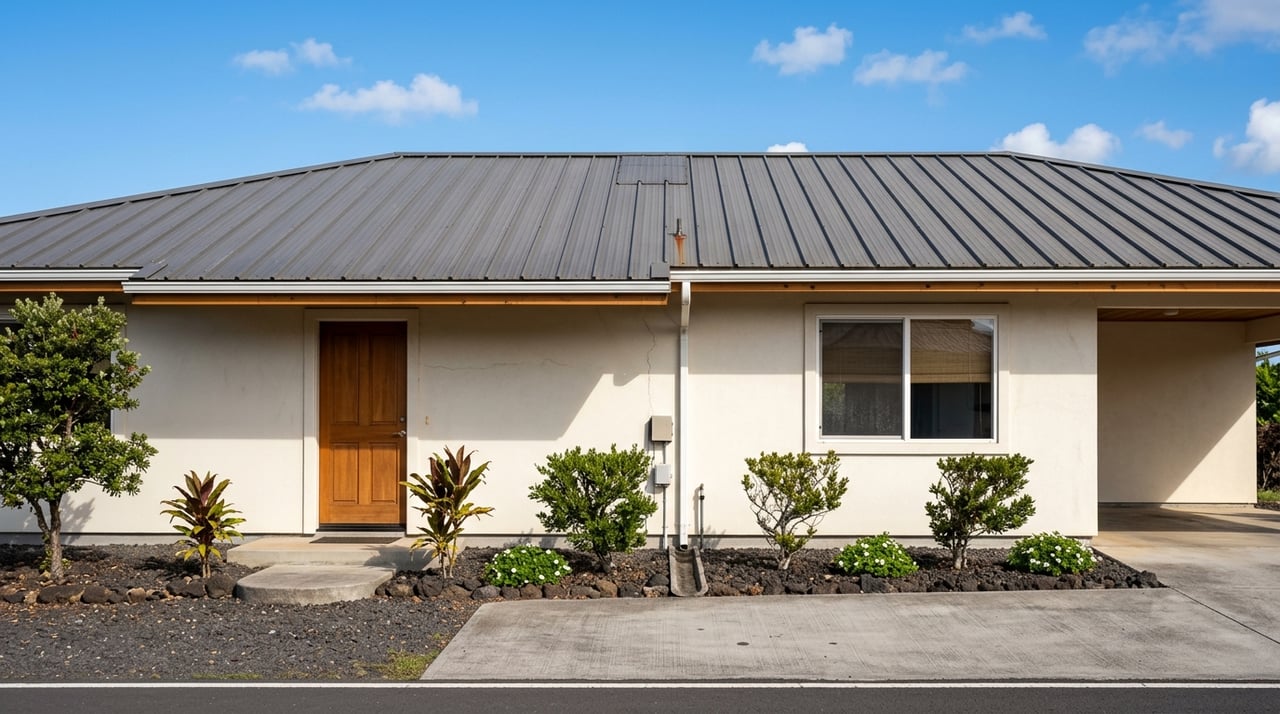
A fixer-upper in North Kona can look like a smart value play at first glance. Then you dig into the structure, wastewater, permits, and site conditions, and the numbers can change fast. If you are thinking about taking on a renovation here, it helps to know what separates a workable project from an expensive surprise. Let’s dive in.
Why North Kona fixer-uppers need a different lens
North Kona is not a low-cost entry market where you can rely on a cheap purchase price to cover mistakes. Realtor.com’s April 2026 snapshot showed 429 homes for sale, 43 homes for rent, a median listing price of $978,000, a median monthly rent of $2,495, and a median 83 days on market.
That matters because most fixer-upper buyers in North Kona are not just buying cosmetic upside. You are usually underwriting value creation through condition improvements, permitting, and sometimes reconfiguration. In other words, the deal has to work even after Hawaiʻi-specific repair and compliance costs are factored in.
Our North Kona evaluation framework
At Hawaiʻi Estates, we look at fixer-uppers through three practical filters:
- Is the permit path defensible?
- Is the shell physically repairable?
- Is there enough resale or rental upside to justify the risk?
If one of those pieces is missing, a project can move from opportunity to liability very quickly. That is especially true in North Kona, where parcel conditions and local approvals can have a major impact on cost and timing.
Start with the lot and location risks
Before you get excited about finishes, views, or layout ideas, start with the parcel itself. North Kona’s coastal and volcanic setting means lot-level hazard review matters.
Hawaiʻi’s coastal-zone program is designed to reduce hazards tied to tsunami, storm waves, erosion, and subsidence. At the same time, the USGS lava-hazard map is a long-term relative hazard tool, not a parcel-specific answer. That means you should treat broad hazard maps as a starting point, not a final decision tool for one specific property.
Coastal review can affect your renovation path
If a property is within the Special Management Area, the SMA permit is the first permit required for development in that area. In Hawaiʻi County, SMA and shoreline setback provisions are administered through the county planning commissions.
For a fixer-upper buyer, this matters because the renovation scope that seems straightforward on paper may trigger a more complex approval path. A coastal lot can still be viable, but you want to understand that early.
Historic review may apply to older properties
Some older buildings can trigger historic-preservation review. Hawaiʻi County’s SHPD form states that before work affecting a historic property on the Hawaiʻi or National Register begins, the owner must notify SHPD and allow review.
Construction cannot proceed until SHPD concurs or 90 days have passed. If you are looking at an older home, this is one of those timeline issues that should be identified before you build a budget around a fast renovation.
Evaluate the shell before the cosmetics
A fresh kitchen and new flooring do not matter much if the structure is not sound. In North Kona, we start by asking whether the house is mostly a renovation project or whether it is drifting into reconstruction.
Many Hawaiʻi single-family homes are post-and-pier construction. A UH Sea Grant retrofit guide notes that these homes can be vulnerable when posts are under-braced, piers are unstable, or the structure has unrepaired termite, dry-rot, wind, or water damage.
Termites are not a minor line item
In Hawaiʻi, termite damage can be a major issue. UH CTAHR identifies the Formosan subterranean termite as the single most damaging insect pest to homes and other structures in the state, and the UH Termite Project says statewide termite-control and repair costs exceed $100 million annually.
That is why we never treat termite evidence as a cosmetic issue. If damage has reached framing, posts, or other structural elements, your budget and scope can change quickly.
Corrosion and wind exposure matter too
Homes near the coastline may need stainless steel connectors and fasteners because of corrosive conditions. That can affect both repair strategy and cost.
Wind code can also add expense. Hawaiʻi County’s building guidance states that where site wind speed is 130 mph or greater, the code requires opening protection such as impact glazing, panels, or a safe room.
Check the major systems early
A fixer-upper budget usually breaks when a buyer discovers hidden systems work late in the process. In North Kona, we pay close attention to roof condition, structural connectors, plumbing age, electrical condition, drainage, and water source.
These are not glamorous items, but they often determine whether the project stays on budget. They also affect insurability, habitability, and permit scope.
Water source can change your maintenance picture
If the property uses rainwater catchment, the State Department of Health says individual home catchment systems are not regulated, but they should be designed, maintained, and periodically tested for safe domestic use.
That does not automatically make catchment a deal breaker. It does mean you should understand the system’s design, condition, and upkeep needs before you buy.
Wastewater can be the biggest surprise
If a property has an on-site wastewater system, the Department of Health says homeowners should verify whether they have a cesspool, septic system, or another individual wastewater system before buying or renovating.
That step is critical because a new or replacement system is not a simple trade permit. According to DOH guidance, the process begins with a percolation test and engineering review, then construction by a licensed contractor, followed by final inspection documentation.
Why cesspools deserve special attention
For many North Kona fixer-uppers, wastewater is the line item that changes the whole deal. DOH says all cesspools must be upgraded, converted, or connected by January 1, 2050, and earlier upgrades can be triggered by certain building modifications that change wastewater flow.
The County of Hawaiʻi’s wastewater planning materials also state that private landowners are responsible for closing their own cesspools and connecting to approved systems. That means you should not assume this issue can be deferred without cost or planning.
Budget using realistic wastewater numbers
DOH’s current support-program page says there are no ongoing financial support programs for cesspool conversion at this time. The state has run prior programs, but those should be treated as historical context, not as something you can count on.
A DOH and working-group finance study estimated cesspool conversion installation costs at roughly:
- $10,000 on the low end
- $23,000 on average
- $38,000 on the high end
That same report noted that actual costs can be higher or lower depending on site conditions and system type. For that reason, we do not underwrite a North Kona fixer-upper assuming the best-case number.
Permitting can make or break the timeline
Hawaiʻi County currently reviews building permits under the 2018 state building code as amended, along with county residential, existing-building, electrical, and energy codes. In practice, a residential permit may also require signoffs or coordination from Planning, Engineering, Solid Waste, and the State Department of Health.
That means permit timing is rarely just about drawing plans and paying a fee. If a buyer underestimates the approval path, holding costs and project fatigue can build quickly.
County approval is not the whole picture
Subdivision and association rules are separate from county approvals. The County of Hawaiʻi warns that a permit application may satisfy county code but still fail CC&R or HOA requirements.
This is a common place where buyers can get tripped up. Even if the county is fine with the work, private subdivision rules may still limit what you can do.
If the plan includes vacation rental use
Some buyers look at fixer-uppers with a future short-term vacation rental strategy in mind. In North Kona, that requires careful land-use review before you assume the exit strategy works.
County planning states that Bill 108, Ordinance 2018-114, regulates STVRs on Hawaiʻi Island. Rule 23 defines permitted zoning districts, and pre-existing STVRs outside those districts may continue only if they register and obtain a Nonconforming Use Certificate.
Compliance is more than zoning
New STVRs must also clear a compliance checklist. County materials state that they must have final building, electrical, and plumbing approvals, and registration must verify state GET and TAT licenses, county property-tax status, parking, and a site plan.
The County of Hawaiʻi also notes that its transient accommodations tax is 3 percent and that an operator may need a county STVR permit. So if vacation rental income is central to the deal, that should be vetted before you count it in your numbers.
The questions we ask before moving forward
When we evaluate a North Kona fixer-upper, we come back to a short list of practical questions:
- Is the structure sound enough that the project is mostly renovation, not reconstruction?
- Are there termite, dry-rot, corrosion, or wind-related issues that could force hidden structural work?
- Does the lot need SMA, historic, wastewater, or STVR approvals before the intended use is legal?
- Does the budget still work if cesspool conversion lands closer to DOH’s midpoint estimate than the low end?
These questions help you stay grounded in what really drives risk here. A property can still be worth pursuing, but only if the facts support the plan.
What a strong fixer-upper usually looks like
In our experience, the best North Kona fixer-uppers tend to share three traits. They have a repairable shell, a workable permit path, and enough resale or rental ceiling to absorb local compliance costs.
That last point is key. With a median listing price of $978,000, median monthly rent of $2,495, and median 83 days on market in April 2026, North Kona can support value-add strategies. But the margin disappears fast if major code, wastewater, or permitting surprises show up late.
If you are considering a fixer-upper in North Kona, having local guidance can save you time, reduce risk, and help you focus on projects with a realistic path forward. When you are ready to evaluate a property with a construction-informed, market-aware perspective, connect with Hawai'i Estates.
FAQs
What makes a fixer-upper in North Kona different from one in other markets?
- North Kona buyers often need to underwrite condition, permitting, wastewater, and site-specific hazards rather than relying on a low purchase price alone.
What should you check first on a North Kona fixer-upper?
- Start with the parcel, hazard context, permit path, and structural condition before focusing on finishes or layout updates.
Why is wastewater such a big issue for North Kona renovation properties?
- A property may have a cesspool, septic system, or another on-site wastewater system, and cesspool conversion can add significant cost and permitting steps.
Can a North Kona fixer-upper become a short-term vacation rental?
- Possibly, but the property must meet county land-use and compliance requirements, and not every location or zoning district will qualify.
How do you know if a North Kona fixer-upper budget is realistic?
- A realistic budget accounts for structural repairs, termite or corrosion issues, permit coordination, and wastewater costs using mid-range assumptions instead of best-case guesses.