Why does one stretch of Highway 11 smell like fermenting fruit some mornings this week, while ten minutes up the road the trees still sit green and quiet? If you've noticed a pickup truck parked at the edge of a field near Hōnaunau with baskets stacked in the bed, or caught a whiff of something sweet and slightly sour drifting past your car window near Captain Cook, you're not imagining a shift in the neighborhood. You're watching the start of coffee season, and it isn't starting everywhere at once.
That's the part most descriptions of "Kona coffee season" leave out. They treat it like a single date on a calendar, the way a fireworks show or a parade has a start time. It isn't that. It's a line moving uphill, and depending on exactly where your house sits on the slope, you're either weeks into it or weeks away from it.
It's Not One Season. It's a Line Climbing the Mountain
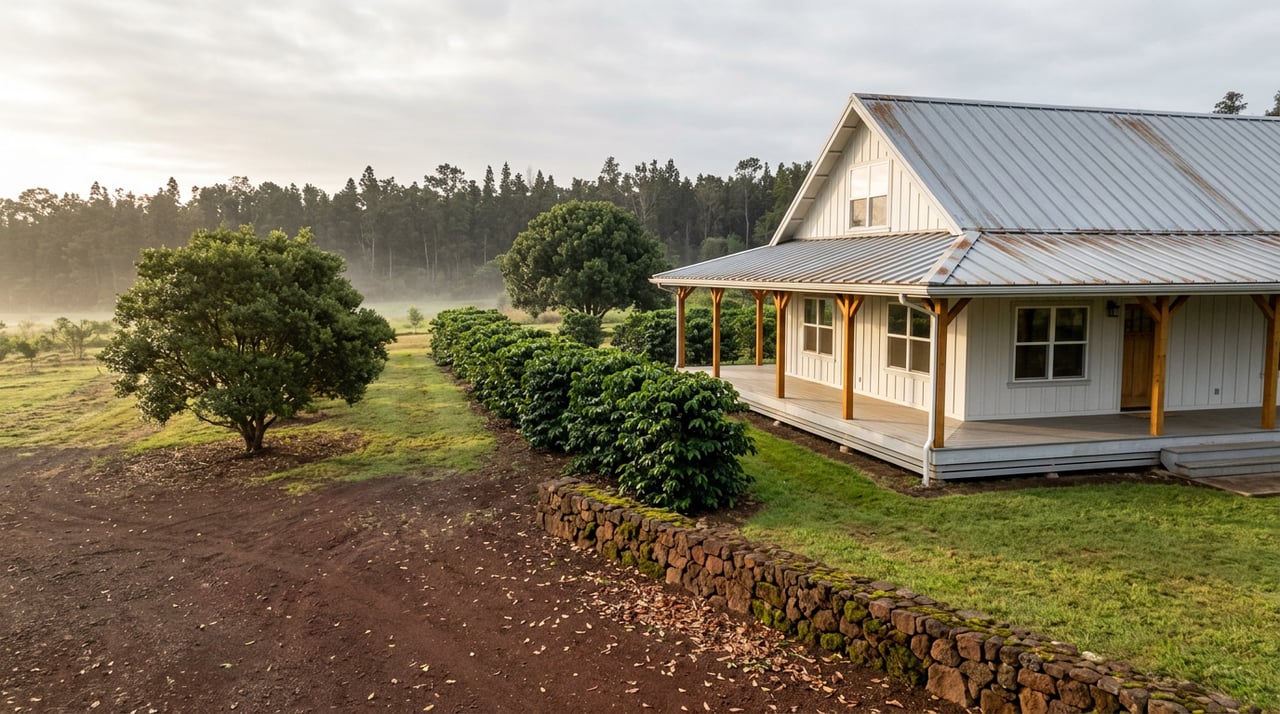
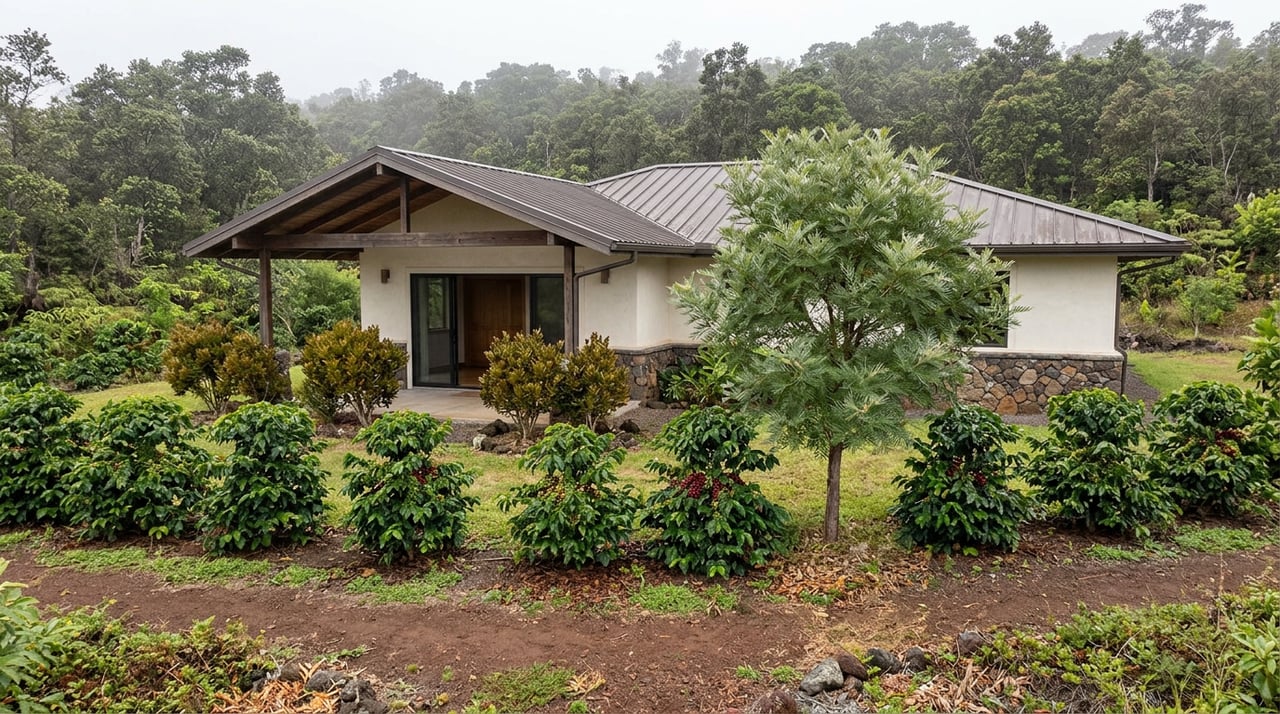
The coffee belt runs from Holualoa down through Kainaliu, Kealakekua, Captain Cook, and Hōnaunau, sitting roughly between 600 and 2,500 feet of elevation on the western flank of Hualālai and Mauna Loa. That elevation spread is the whole story. Lower ground warms and ripens first. Growers who work the belt describe South Kona's lower elevations as the part of the mountain that typically turns red before the farms higher up do.
That means the same week can look completely different depending on your street address. A homeowner near the coast road in Captain Cook might already have a wet mill running some afternoons. A neighbor a few hundred feet higher, closer to Kainaliu town, might still be looking at trees that are mostly green with a scatter of yellow. Someone farther up toward Holualoa is probably weeks from seeing red at all.
Here's roughly how growers describe the climb, in general terms rather than exact dates, since weather shifts the timing every year:
| Elevation band | Rough location | What's typically happening in late August and September |
|---|---|---|
| Lower slope (600–1,200 ft) | Hōnaunau, Captain Cook, lower Kealakekua | First cherries turning red, early picking rounds underway, wet mills starting to run |
| Mid slope (1,200–1,800 ft) | Kainaliu, upper Kealakekua | Mostly green to yellow fruit with scattered red, picking usually just beginning |
| Upper slope (1,800–2,500 ft) | Toward Holualoa and the Hualālai flank | Trees still largely green, harvest typically opens weeks later and can stretch into winter |
None of this is a forecast for any single farm this year. It's the pattern the belt follows most seasons, and it's why "harvest started" is really a question with a different answer depending on where you're standing.
What You're Actually Noticing Right Now
Once you know the mechanism, the small stuff makes sense. The smell is real cherry pulp being separated from the bean at a wet mill, something that only happens once fruit is ripe enough to process, usually within a day of picking. The wooden decks you might see going up on a neighbor's property, the sloped platforms locals call hoshidana, are drying floors where the parchment coffee gets raked and turned in the sun for a week or two after milling. If you see one bare and empty on one property and covered in reddish-brown parchment on another a few hundred feet up the road, that's the elevation gradient again, not one farm working harder than the next.
Farmers also describe the trees themselves as strange to look at during this stretch, since a single branch can hold white blossoms, green fruit, and deep red cherry all at the same time. Locals call the blossom phase "Kona snow" for the way it dusts the hillside white for a few days each spring. What you're seeing now, in late August, is the other end of that cycle: the fruit those blossoms turned into, finally ready.
A few things worth watching for as the line keeps climbing over the next month:
- Pickup trucks parked at field edges with baskets or canvas bags, usually early morning
- The sound of a pulper running, a low mechanical churn mixed with running water
- Drying decks appearing on properties that were bare all summer
- Roadside stands starting to advertise fresh or new-crop beans before the bigger farms catch up
The Workers in the Rows Aren't on a Strip-Picking Schedule
One reason there's more truck and foot traffic along the belt through the fall than almost any other time of year is that Kona coffee is entirely hand-picked. The terrain is too steep and uneven for the mechanical harvesters used in flatter coffee regions, and even where machines could work, they can't tell a ripe cherry from an unripe one the way a person can. So pickers walk the same rows two or three times across the season, coming back every few weeks as more fruit turns red.
Kona Earth, a farm further up the belt, has said publicly that its pickers are paid by the pound for what they bring in, with rates that have run around a dollar and change per pound of cherry in recent seasons, and an hourly rate near $30 during the off months when there's less fruit to pick. That's a specific number from one farm rather than a belt-wide standard, but it points to something true across the region: the labor behind a bag of Kona coffee is priced by the piece, not stripped off a branch by machine, which is part of why this stretch of highway gets noticeably busier with farm trucks from late summer into winter.
The Festival Sits at the Middle of the Wave, Not the Start
By the time the Kona Coffee Cultural Festival runs its parade and cupping competition in Kailua-Kona this coming November, the lower slopes of South Kona will already be well into their harvest, some farms on their second or third picking round. The higher end of the belt, up around Holualoa, will likely just be getting started. This year's festival marks its 56th run, more than half a century of the same ten-day stretch anchoring the season for visitors and residents alike. But for anyone living on the lower part of the mountain, the festival isn't opening day. It's closer to the middle innings.
That mismatch is worth knowing if you've ever wondered why some neighbors seem to be celebrating a finished crop around the same time others are just watching their first cherries turn.
Knowing Where You Sit on the Line
If you live below Kealakekua town, you're probably already watching the early rounds of picking happen around you. If you're closer to Kainaliu, you're likely a few weeks out. And if your address sits higher, toward Holualoa, the wave hasn't reached you yet, and won't for a while. All three experiences get called "coffee season" by anyone looking at the belt from the outside, which flattens something that residents actually live through in stages.
Hawai'i Estates is based in Kealakekua, sitting almost exactly in the middle of that elevation line, close enough to watch both ends of the season play out most years. If you're curious what a property along this stretch of the belt is actually worth this season, or you're weighing a move somewhere else on the mountain and want to understand what the elevation gradient means for daily life on a given parcel, get your Instant Home Valuation and we'll walk you through what we know about the specific slice of the belt you're looking at.