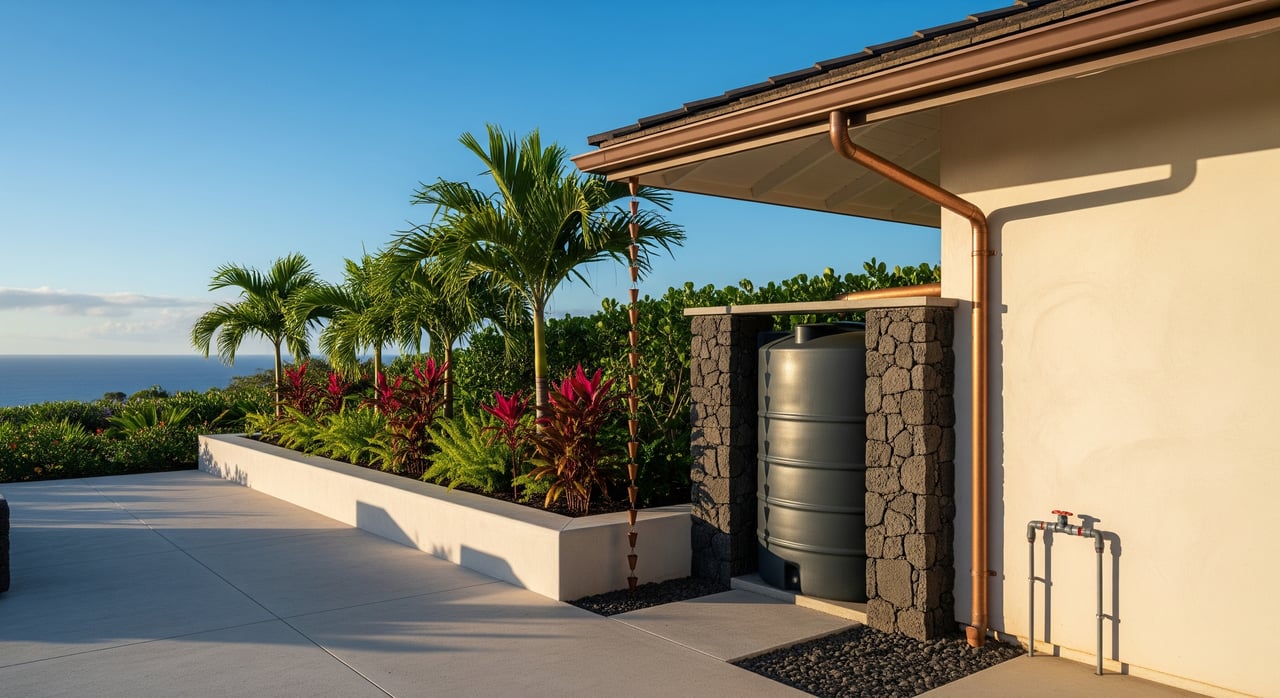
Rely on your catchment every day? A simple, local calendar can keep your water clear, safe, and hassle-free. In Puna, where many homes use rainwater systems, small routine steps make a big difference, especially with vog, heavy rain, and storm season in the mix. In this guide, you’ll get a Puna-specific maintenance calendar, testing targets, and event-driven actions that protect your household. Let’s dive in.
Why a Puna-specific plan
Puna’s frequent rainfall means more roof debris and sediment can reach your tank, so regular checks matter. Local experts treat rainwater catchment as a primary water source, and they provide clear design, maintenance, and testing guidance for island homes. You can review the University of Hawaiʻi CTAHR’s catchment guidelines for Hawaiʻi anytime for deeper detail. See CTAHR’s Hawaiʻi guidelines.
Volcanic ash and vog from Kīlauea can lower pH and increase the chance of metals like lead and copper leaching from roofs and plumbing. During active periods, adapt your routine and protect your system. Learn CTAHR’s vog and ash advice.
Hurricane season runs June 1 to November 30. Intense storms can damage components and contaminate stored water, so pre- and post-storm steps are essential. Review Hawaiʻi DOH storm-season guidance.
Your maintenance calendar
Weekly checks
- Walk the roofline, gutters, downspouts, and inlet screens. Remove leaves and large debris so less material reaches your tank. See O&M basics.
- If you use chlorine, spot-test for a small free-chlorine residual. CTAHR notes roughly 0.2 to 1.0 ppm is common, and DOH suggests about 1.0 ppm as a buffer. See CTAHR testing tips.
Monthly care
- Empty and clean inlet strainers, first-flush devices, and debris baskets. Follow O&M frequency guidance.
- Confirm first-flush diverters reset and flow correctly, especially after heavy rain or long dry spells.
- Inspect vents and overflow screens. Fix torn mesh and clear blockages to prevent mosquitoes and small animals from entering. See mosquito prevention basics.
Every 1 to 3 months
- Replace or clean sediment cartridges according to the manufacturer. Coarser filters are often changed more frequently. Keep spares on hand. Review component care.
Quarterly checks
- After long idle periods, run taps for a minute or two to flush lines before drinking.
- Inspect pump operation, pressure, and visible pipes. Check for leaks, damp spots, or odd noises. See O&M checklist.
Annual tasks
- Do a lab screening after treatment at the tap. Hawaiʻi DOH highlights these targets: E. coli absent, turbidity at or below 5 NTU, lead at or below 0.015 mg/L, and copper at or below 1.3 mg/L. A subsidized lead and copper test is often available once per year; confirm current details. See DOH catchment guidance and labs.
- Inspect the tank interior, exterior, roof, and catchment surfaces. Look for corrosion, cracks, biofilm, or sludge. Tighten seals, refresh gaskets, and verify access hatches and overflows are screened.
- Replace a UV lamp if installed, and clean the sleeve per manufacturer instructions. Review UV and O&M notes.
Every 1 to 3 years
- Check tank bottom sludge and clean if buildup is significant or after contamination events. Many Hawaiʻi homeowners follow CTAHR’s general guidance for inspection and periodic cleaning. See CTAHR’s Hawaiʻi guidelines.
Event-driven steps
After ash or vog
- Disconnect downspouts and pause collection until roofs and gutters are flushed clean by rain or rinsed. Empty and clean inlet filters.
- During active ash or vog, CTAHR suggests raising pH to reduce metal leaching. Dissolve 1 to 2 boxes of baking soda in water and add to the tank every 2 to 4 weeks until conditions stabilize. Keep extra sediment filters on hand. See CTAHR’s vog guidance.
After storms or flooding
- Do not drink stored water until you inspect, flush, and perform a lab test for bacteria and turbidity. Use bottled water or emergency spigots if needed. Storm-season guidance.
- Inspect the tank, supports, roof, pipes, and pump for damage. Repair before returning the system to normal service.
- For county emergency water resources, check the local Department of Water Supply page. Hawaiʻi County DWS catchment resources.
If water seems off
- Any change in taste, odor, color, or sediment is a trigger to clean pre-tank screens, disinfect if needed, and order a lab test. DOH guidance and targets.
Treatment and replacement tips
- Sediment pre-filtration protects everything downstream. Change cartridges on schedule. Component O&M guide.
- Activated carbon can reduce certain metals and organics. Choose filters with NSF/ANSI certifications for the contaminants that matter to you. CTAHR testing and treatment notes.
- UV works well if turbidity is low. It disinfects at the point of use but needs prefiltration and yearly lamp replacement.
- Chlorination is affordable and adds residual protection. Keep a small free-chlorine residual and allow proper contact time. Many homes combine sediment, carbon, and UV or chlorine for robust treatment.
Keep records like a pro
- Log filter changes, tank cleanings, repairs, chlorine residual checks, and lab results. Trend your results against DOH targets so you can spot changes early. DOH testing overview.
- Set calendar reminders for each task on this schedule. Store manuals and serial numbers in one place.
- If you add or change treatment components, note the date and recommended replacement intervals.
Puna quick checklist
- Weekly: clear gutters and inlet screens; verify chlorine residual if used.
- Monthly: clean strainers and first-flush; check vents and overflow screens.
- 1 to 3 months: replace sediment cartridges as needed.
- Quarterly: flush taps after idle periods; inspect pump and lines.
- Annually: lab test for E. coli, turbidity, lead, and copper; full system inspection; replace UV lamp if installed.
- 1 to 3 years: check tank sludge; schedule cleaning if buildup is significant.
- Event-driven: after ash or vog, pause collection and flush roof; after major storms, do not drink until tested.
Ready to buy or sell in Puna and want practical insight on properties with catchment systems? Reach out to the local team at Hawai‘i Estates for neighborhood-savvy guidance and construction-minded support.
FAQs
How often should Puna homeowners lab test catchment water?
- At least once a year for E. coli, turbidity, lead, and copper using a DOH-approved lab, and any time water quality changes or after system repairs. DOH testing guidance.
What chlorine level is recommended for a home catchment system?
- CTAHR notes roughly 0.2 to 1.0 ppm free chlorine residual, and DOH suggests around 1.0 ppm as a buffer; always confirm with proper test strips. CTAHR testing notes.
What should I do with my system after volcanic ashfall in Puna?
- Disconnect downspouts, clean the roof and gutters, flush first-flush devices, clean inlet filters, and consider pH adjustment with baking soda during active ash or vog. CTAHR vog guidance.
Which lab tests does Hawaiʻi DOH recommend for catchment water?
- Screen for E. coli (absence), turbidity (≤ 5 NTU), lead (≤ 0.015 mg/L), and copper (≤ 1.3 mg/L) after treatment at the tap using a DOH-approved lab. DOH guidance.