Buying land in South Kona can be a dream move, but the deal only works if the basics do. Water, wastewater, and road access drive your total cost, permit timeline, and even your financing options. If you want a smooth build or a simple off-grid setup, you need the right checks up front.
This guide gives you a clear, practical checklist to confirm water service or catchment, plan for septic or cesspool conversion, and verify legal and physical access that meets fire-safety standards. You’ll learn what to ask, where to look, and how to avoid surprise costs before you write an offer. Let’s dive in.
Water: County or Catchment
Water is the first make-or-break factor for a South Kona lot. Some parcels can connect to the County of Hawai‘i Department of Water Supply (DWS). Others rely on rainwater catchment or hauled water. Your due diligence starts here.
County water: confirm service and commitments
DWS runs multiple island systems and sets the rules for new meters, service limits, and capacity through its formal process of water commitments. The official DWS Rules outline service limits by elevation and explain when system upgrades or a Water Development Agreement may be required before a commitment or meter can be issued. Review the program basics in the Department of Water Supply Rules.
What to do next:
- Ask the seller or listing agent for any DWS meter number, existing account, or written water commitment tied to the TMK.
- Contact DWS or use its service-area resources to confirm whether the parcel lies within a distribution system and if a meter or formal commitment is available.
- If new service is needed, submit a Water Service Application early. Forms and current fees are posted in the DWS application packet.
Why it matters: initial commitments are time-limited and may require deposits, extensions, or system improvements. Capacity, pressure zones, and elevation can all affect whether you get a meter and how long it takes. Planning for fees and timelines up front helps you structure contingencies and close with confidence.
Rainwater catchment and hauled water
Many rural South Kona properties use roof-to-cistern systems. DWS does not regulate residential catchment and points residents to the Department of Health for safety guidance. See DWS’s overview on rainwater catchment basics and safety.
What to check if the lot uses catchment:
- Cistern size, age, material, and condition.
- Filtration, first-flush diverters, and UV or other treatment components.
- Recent water-quality testing results.
- Delivery logistics and cost if you plan to haul water.
Catchment is common and legal. The key is proper design, maintenance, and testing. Confirm the system details before you set your budget.
Wastewater: Septic, Cesspools, and DOH Rules
Onsite wastewater is regulated by the Hawai‘i Department of Health (DOH) Wastewater Branch. You will need an approved Individual Wastewater System (IWS) for most builds or a plan to convert any existing cesspool.
Cesspool law and conversion timeline
Under state law (Act 125, 2017), cesspools must be upgraded or closed by the statutory deadline, with high-risk areas potentially seeing earlier requirements. If a parcel currently uses or previously used a cesspool, you should plan and budget for conversion. Read the DOH guidance on cesspools and conversion requirements.
Approved IWS options and site-specific design
DOH maintains the IWS permit process and a list of approved technologies, including conventional septic systems with soil dispersal, aerobic treatment units, passive aerobic media systems, engineered mounds, and limited-flow options like composting or incinerating toilets. System choice is site-specific and must be designed by a licensed engineer and approved by DOH. Start with DOH’s overview of Individual Wastewater Systems.
South Kona’s lava substrate often requires engineered design for dispersal. Fractured basalt and shallow soils may call for deep trenches, pressurized dispersal, or specialized media systems rather than simple leach fields. Expect a site evaluation and an engineered plan on many parcels.
Costs and timing to expect
Cesspool-to-IWS conversions commonly run in the tens of thousands of dollars, with many projects falling in a ballpark of $20,000 to $50,000 and remote or complex sites exceeding that range. Local efforts are underway to coordinate planning and assistance. For islandwide strategy and timing context, see the County’s Integrated Wastewater Management Plan project.
Permitting and contractor availability can add months to your schedule. Begin DOH conversations early in escrow and bring in a local civil engineer for a feasibility opinion before you finalize your offer price.
Practical steps:
- Request DOH IWS records for the TMK and ask the seller for as-built plans, approval letters, and pumping records.
- If a cesspool is present, price multiple conversion options and include that range in your budget.
- Line up engineering and permitting support early so construction can begin on time after closing.
Access: Legal, Physical, and Fire Safety
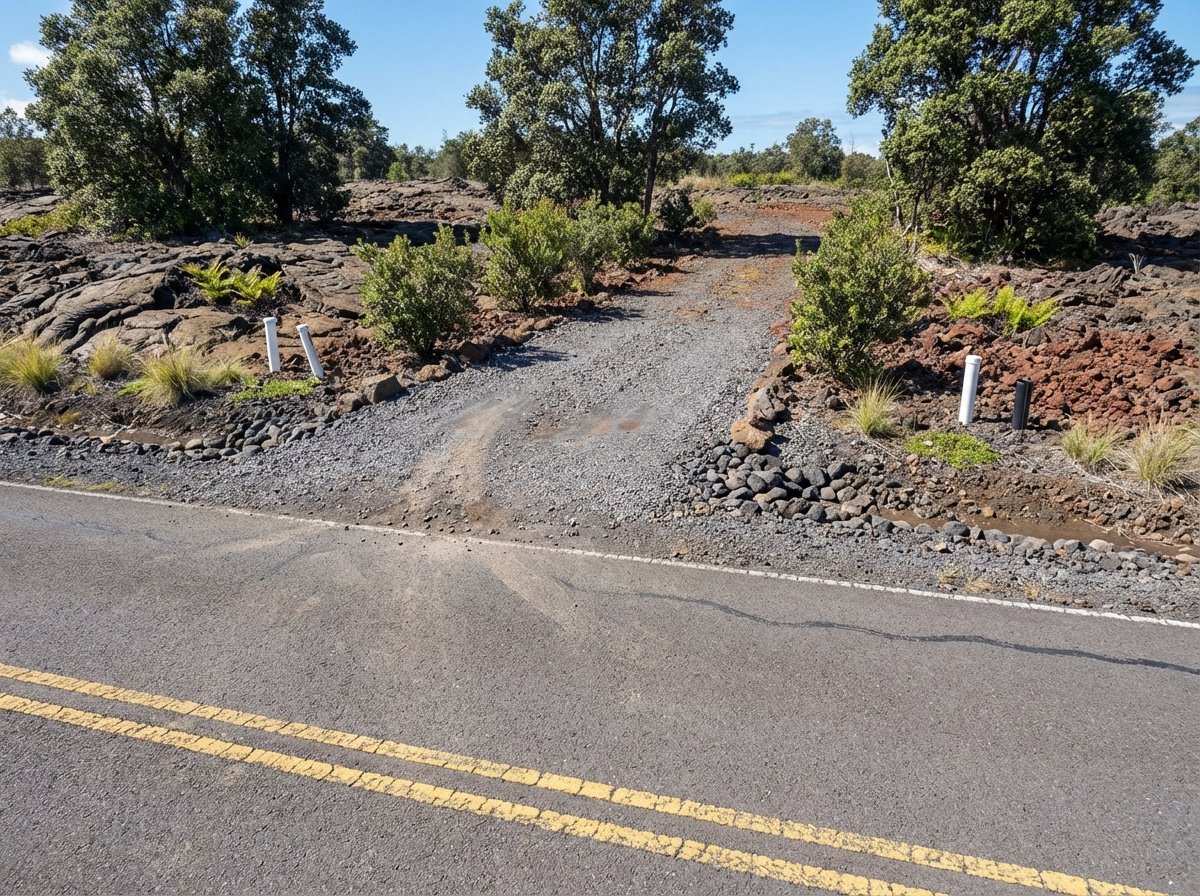
Every parcel needs both legal access and practical, all-weather physical access. Without both, building permits, insurance, and financing can be at risk.
Legal access and road status
Confirm that your lot fronts a public road or has a recorded easement. If access relies on a private road, verify maintenance obligations and whether the County has accepted it for maintenance. The Department of Public Works offers guidance on county right-of-way and road acceptance. Start with County right-of-way and acceptance information and check the County’s page on roads in limbo to understand maintenance status.
Title work should surface easements and road agreements. If documents are unclear, talk with your escrow officer and a real estate attorney to confirm you can legally access and improve the lot.
Fire access and permit routing
Driveway and emergency access standards are reviewed during building permit routing. Hawai‘i County enforces the State Fire Code with local amendments, and plans typically require clear widths, vertical clearance, and, for longer dead-end driveways, an approved turnaround. Requirements can vary with site conditions, so confirm them with the Fire Prevention Branch early. See the County’s Fire Code information and local amendments.
Early conversations can save you a redesign later. If your planned driveway is narrow or steep, factor in grading, surfacing, and turnaround improvements before you finalize your construction budget.
Slope, Lava Hazard, and Build Feasibility
Topography and lava hazard shape both your design and your financing path.
Lava zones and financing implications
USGS and the Hawaiian Volcano Observatory provide the island’s authoritative lava-flow hazard zones map and FAQs. The zones are long-term, relative categories that inform planning. Properties in lower-numbered zones, like Zones 1–2, face higher long-term lava hazard, which can affect insurability and loan options. Review the HVO overview and mapping resources in the USGS lava hazards FAQ.
If your target parcel falls in a higher-hazard zone, speak with lenders and insurance agents who regularly work on the Big Island. Some loan programs have restrictions in certain zones, and coverage terms may differ by carrier. Clarify this early so you can choose the right financing path.
Slope, lava substrate, and foundation design
Steep slopes and fractured lava often require geotechnical investigation and engineered foundations. Significant grading, retaining walls, or slope stabilization will trigger County review and permits. See Public Works guidance on grading, grubbing, and stockpiling requirements.
During due diligence, consider a brief site visit with a local civil or geotechnical engineer. A high-level memo can outline likely foundation types, drainage, and wastewater dispersal strategies and give you an order-of-magnitude cost range for planning.
A Pre-Offer Checklist for South Kona Land
Use this list to reduce risk before you write an offer:
- TMK and hazard check
- Pull the parcel in the USGS/HVO map or State GIS to confirm lava zone and note slope conditions. Start with the USGS lava hazards FAQ.
- Water
- Ask for an existing DWS meter number or account. If none, request a written water-availability check or water commitment from DWS. Review the DWS Rules and use the DWS service application to start early.
- For catchment, confirm cistern size, treatment components, and recent water testing. See DWS catchment guidance.
- Wastewater
- Request DOH IWS records for the TMK. If a cesspool exists, read the DOH overview on cesspools and conversion and price alternatives. For system options and permitting, see DOH IWS guidance.
- Access
- Order a title search to confirm recorded access easements. Ask DPW whether the road is County-maintained, private, or listed among roads in limbo. Review right-of-way acceptance basics.
- Fire and grading
- Check driveway width, clearance, and turnaround needs with the Fire Prevention Branch using the County’s Fire Code information.
- For steep or complex terrain, confirm grading and erosion-control requirements with DPW using the grading and grubbing guidance.
- Engineering and budget
- Engage a local engineer for a simple feasibility memo covering likely foundation design, wastewater dispersal, and rough cost ranges.
- Lenders and insurance
- Ask lenders and insurance agents about their policies for the parcel’s lava zone and location. Confirm down payment, loan type, and coverage implications before finalizing offer terms.
How we help you buy smarter in South Kona
You deserve straightforward answers and a clean, confident close. As a boutique, locally owned brokerage in Kealakekua, we pair neighborhood-level knowledge with practical construction insight to help you:
- Confirm utilities, access, and permitting paths early in escrow.
- Coordinate the right due-diligence steps and paperwork on time.
- Understand build feasibility and total project costs before you commit.
Ready to talk through a specific lot or build plan? Reach out to Hawai'i Estates for a friendly, detailed game plan tailored to your goals.
FAQs
What is a DWS water commitment for a South Kona lot?
- It is a written confirmation from the Department of Water Supply that capacity is reserved under stated conditions and timelines, often with deposits and extensions defined by the DWS Rules.
Is rainwater catchment allowed for homes in South Kona?
- Yes, many rural properties use catchment; DWS does not regulate residential systems and directs owners to safety guidance, so verify cistern size, treatment, and recent water testing.
How do I know if a Hawai‘i Island parcel has a cesspool or septic?
- Request DOH IWS records for the TMK and ask the seller for system plans and approval letters; if records show a cesspool, plan and price conversion before making an offer.
Can I get a mortgage on a South Kona property in lava zone 2?
- Many lenders and insurers set special requirements for higher-hazard zones; check with Big Island–savvy lenders early to confirm eligible programs, down payment needs, and insurance terms.
What does “roads in limbo” mean for access in Hawai‘i County?
- It refers to roads not accepted for County maintenance, which can affect access, improvements, and financing, so confirm maintenance responsibility and legal easements during due diligence.
Will my long driveway need a fire-truck turnaround?
- If a driveway is a long dead end, a turnaround is typically required under the locally adopted Fire Code; verify exact clearance, width, and turning standards with the Fire Prevention Branch.